|
|
Paula Fong Influenced - Now Influencing a New Generation |
|
Singer, songwriter
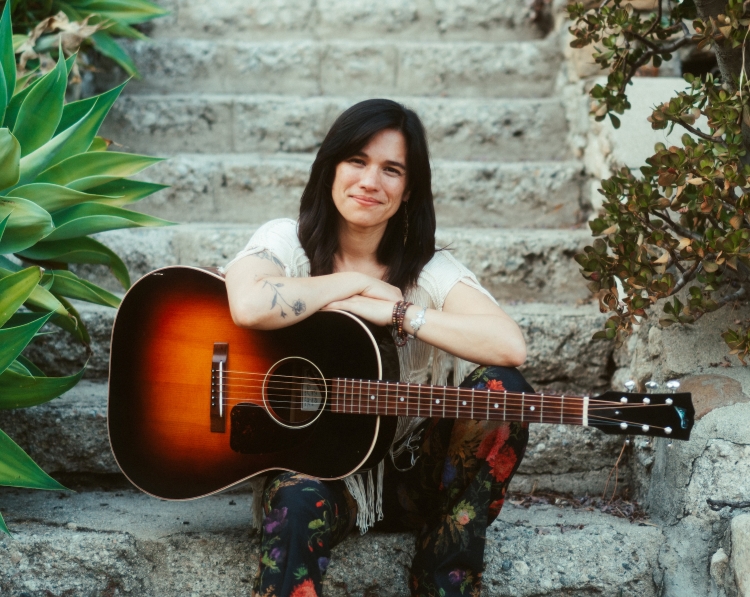
and musician Paula Fong is an interviewer’s dream, she pauses to
thoughtfully answer your questions, is articulate, and yes, she makes
good music. She is also excited about the release of her new album A
Bird on the Wing.
“Oh my gosh, there are so many things (to be excited about). It is my
first full length album and that is very exciting, because I feel it is
a new expression of my body of work and I feel is representative of this
phase in my music career and that I haven’t achieved before.
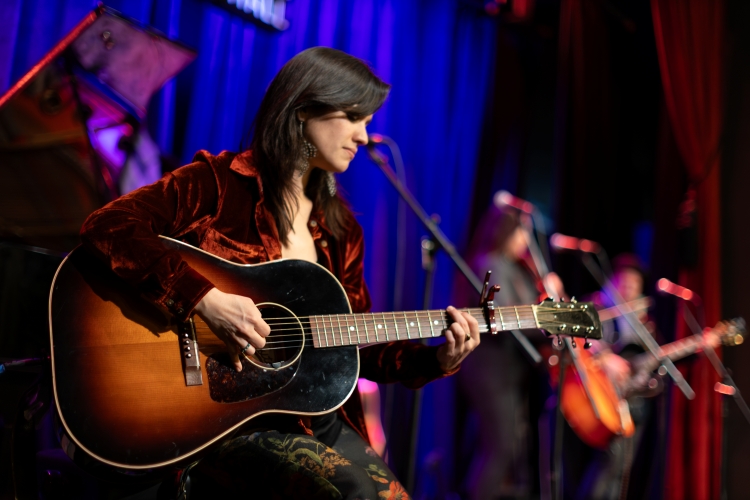
There were a lot of things I was excited about going into the recording
process with my producer, exploring new sounds, trying to stretch out
and grow as a musician and artist. For example, incorporating string
sections with the violin, cello, and viola was something I really
enjoyed doing. I experimented with new sounds and arrangements that I
hadn’t done previously. With my first EP I was trying to capture more of
a live sound. It was recorded in a studio, but it was representative of
things that I do when I perform live,” she says.
Continuing she says, “At one point we were going to release it in (five
song blocks) and then we decided to have it just be one cohesive album.
We were working two main days in the studio and on one day we had all
the string players sitting together in a room and they were recording
live to the room. On the second day we had drums, electric guitar and
some other instrumentation. There were two separate sonic approaches to
a lot of songs on the album, but there were a few that were done outside
of that entirely.”
The first three tracks on the album, “River Run,”
“Marianne,” and
“Ophelia,” were recorded at Swan Dive Sound and were produced by
Justin Sinclair who also produced the rest of the album. You will not
get far into “River Run,” before you are hooked on Paula Fong’s
beautiful vocals. She is reminiscent of a young Allison Krauss. Phil
Glenn’s banjo and Casey Lipka’s upright bass introduce us the song,
while Paula Fong accompanies herself on acoustic guitar.
“Marianne,” begins like a slowly flowing, meandering river, picks up the
temp and then falls back into a quieter story. Paula Fong provides
insight into the song, “This
song was actually written (because of) a prompt in a songwriting group.
It was a co-write with another songwriter. The (goal) was to write a
song that would fit into a soundtrack. I had an opening riff that I had
written ages ago and I wanted to use that in something. When I had this
opportunity, I brought it up to her and she liked it.
The majority of it is both trying to capture the relationship of the
main characters who to me were two people who were dealing with the
stigma of mental health issues that can cause people to feel isolated
and alone, also finding companionship with each other. I drew from
personal experiences where I had similar things happen to me, as well as
having relationships that were significant enough to carry me through
really difficult times. In
particular, having a friend that is inspirational, because of the
freedom with which they move through the world. Having somebody who can
push back against all of these things we feel we need to carry around
and we think we need to be, while forcing ourselves outside the natural
flow. To see someone who can just exist and be comfortable in their own
skin, is such an inspiration and I feel those people are really valuable
in life.”
When a song has been recorded by legendary artists such as Pete Seeger,
Judy Collins and The Byrds, such as is the case with “Turn, Turn, Turn,”
based on Ecclesiastes
chapter three verses one through eight, fitting for a music director at
her church, it can be for some artists a daunting project.
Paula Fong says, “This is one of the things I am excited about. We
thought about what (the album) should be and we went through many, many
ideas. When we stumbled upon Turn, Turn, Turn at first I was reticent,
because of exactly what you were talking about. The Byrds version is so
firmly planted in my mind. I wasn’t familiar with Judy Collins or Pete
Seeger’s versions until we started diving a little bit deeper.
A lot of people have covered it, because it is such a wonderful song.
The scripture from Ecclesiastes is just timeless and so many people
everywhere can relate to it. The theme itself seemed to resonate with me
and my music and the themes that I deal with in my writing as well. It
all seemed to align. When I
think about covering a song that has been very popular you have to have
a reason, a purpose for doing it and not just trying to sound like
something that has been done before. We dove deep into as many covers
that had been done before. My producer Justin is the one who introduced
me to Pete Seeger’s version. When he played that for me there was
something magical about the way Pete approached it. It was so simple and
I think that is where that timelessness sprung from. I am amazed
honestly, with what The Byrds did with it.
Two of the ones that struck as interesting interpretations were Nina
Simone’s version and we took some of the chord changes as inspiration
from her. We incorporated them into our version. Also, I am a fan of
Elizabeth Mitchell. She does a lot of children’s book music. That was
more a stripped-down Folk arrangement and I thought that might be an
interesting approach that hadn’t been done before.
It is very different from the Pete Seeger version, very, very different
from The Byrds and hopefully has something for everyone in it.
The other exciting part is my producer was able to ask Sean Watkins
(Nickle Creek) and he agreed to be on it. Nickle Creek was one of the
first Americana bands that influenced me.”
Paula Fong’s music cannot be narrowly defined or pigeonholed, so it
causes one to wonder what some of her earlier influences were.
“I think I had many influences from when I was younger, but the biggest
and most significant ones came when I joined the church band that I now
run as the musical director. When I first joined, it was a six-piece
band and the director had a very wide and broad background in music. She
was an LA player who had been doing all kinds of gigs around town and
they asked her to direct the service and to bring in Americana Folk
music. They wanted her to bring it to the service and not necessarily do
Christian music, to bring the outside world into the music itself. Every
week we would play three new songs and she would give us CDs of thirty
plus songs to study and we were to pick from them. You never knew what
you were going to get. We would do three new band songs per week, plus
four hymns.
I was exposed to new artists so frequently (she smiles) I think that is
where some of the diversity came from. I have been compared to Karla
Bonoff for my versatility. I think one of the people that struck me
deeply with her versatility is Patty Griffin, who was able to cover so
many different sounds with her writing. I felt inspired by all the
different approaches that she took.
We would play everything from Jackson Browne to the Americana
umbrella, which is very broad. That is really where I got my start,”
Paula Fong explains.
Paula Fong’s music and life have also been shaped through the various
places she has lived and now
she makes her home in Los Angeles.
“The summers that I spent in France from when I was twelve to when I was
sixteen and worked for my aunt and uncle in the countryside and the
Breton music was a huge influence. My uncle was a singer and loved music
so much that he ended up having multiple programs going on at the
campsite. He would have (someone) come in and teach the circle dances to
the campers and he would sing,” she says.
We ask Paula Fong to take a moment to explain to us and our readers what
Breton music is.
“Breton music is French Celtic music. The region is called Brittany (in
France). Breton is the style of music and also the language and culture
there. The roots of the Breton music are Scottish and Irish. They
carried over to that northern part of France. French Gaelic is still on
all the signage there. They are teaching it in schools and it is very
much alive. That really interested me when I was young in a way that was
foundational. I didn’t realize that until much later in my music career
when I started reconnecting with it and remembering it. It came out in
my writing.
My mother’s roots
are in Kentucky where she was born. I had a connection with that family
and music background. I lived in North Carolina for a while in the Black
Mountains (part of the
Appalachian
Mountains and the Blue Ridge Mountains). Then I was in LA surrounded by
LA singers and songwriters.”
Let’s talk about “River Run,” Paula.
“River Run is a song that I wrote when I was in Eugene (Oregon) and I
had a day off while on tour. I ended up sitting by the banks of the
McKenzie River. At the time I had something heavy weighing on my mind. I
was surrounded by beautiful nature, enveloped by the sound of the water
and by the sights around me. When I started to write that is what came
out and the chorus came out first. Rhythmically it has a chugging motion
like the river. That is what I was trying to capture. There are some
elements of it that are a little sombre because of the weight that I
felt. I was hoping that it would also bring peacefulness.
I started writing it then, and I would say about another four months
went by. Then I picked the song up again and there were pretty heavy
things going on in the world and that is when I finished writing the
song. I wrote that first little piece and connected it with the outside
world and brought those things together. I hoped that peace that the
river brought to me, would expand and reach further out and beyond.”
Once again Paula Fong’s vocals hold you captive, while Phil Glenn
(banjo, piano and background vocals), Casey Lipka (upright bass) and
Drew Taubenfeld’s dobro accompany her. The lyrics and her voice lean
into seeking that serenity she experienced by the river.
The album title A Bird on the Wing, is drawn from the song of the
same name.
She says, “I had been in an Americana duo for about four years with a
singer and songwriter named Tom Kell. He and I wrote together and
performed until he passed away from cancer. It was tough to lose him. I
took a little bit of a step back from music. I then remerged as a
different version of myself with my performance and my writing. A
Bird On the Wing is really capturing that reemergence of music into
my life. I feel this album is a representation of that transformation in
my music life. I feel it is the right name for this album and the
overarching theme for this group of songs, as me stretching my wings as
an artist and flying.”
“Up and Out,” is very up-tempo and Phil Glenn is spectacular on piano
and Paula Fong reminds one of 1980s Patty Loveless.
“When I wrote this song I wrote it much more Bluegrass style. In
performing it I (play it) more as straight-ahead Country Bluegrass feel.
Then when we got into the studio, I had brought a reference track of
Patty Griffin’s called “Move Up,” which I had sung in a church service
before and I loved it. I love singing vocals on that and the energy
behind it has this amazing driving energy. We listened to that track and
everybody said that is what we are doing. That is what came out.
It was such a fun experience to have that transform after listening to
somebody else’s completely different song and infusing this song with
it. “ Paula
Fong gives credit to her producer Justin Sinclair for assembling a great
group of musicians, some of whom she says were already her friends. They
include Cory Tramontelli on bass, whom she counts as one of her best
friends. Ethan Sherman
(guitar), Ellery Marshall (banjo), Liam Lewis (mandolin), Teresa James
(vocals), Rita Andrade
(viola), Leah Metzler (cello). There is also an amazing cast of
vocalists, including, Tashi T., Abby Posner, Leeann Skoda, Sean Watkins
(who also plays guitar). We apologize if we have missed someone, because
there were so many splendid musicians who appear on this album.
The mixing was done by Caleb Parker and the mastering was done by
Jack Kennedy. The album was also recorded at Bell Choir Studio.
Are you ready for a shocker?
I bet you imagined that from the time she could first speak, Paula Fong
had her music career all mapped out.
Not so says Paula, “I started singing in choirs and I loved singing in
groups and finding harmonies. My parents were both working parents and
my mom had to go to the office so early that the only thing she could do
was to drop me off at the school choir. (she smiles and says) I
got an early start at that because of her schedule.
It (music) became a focal point in my life and I think at one point in
high school I was in five different choirs.”
Please visit
the
website
for Paula Fong, you can follow her
on
Instagram
or listen to her music on
her
YouTube channel.
#RubyDice #AustinTexasMusic #CountryMusic #RivetingRiffs #RivetingRiffsMagazine #EntrevistaMusica
|